Deciding on a decode-only slice for latency-sensitive AI
Use a decode-only slice only when split prefill/decode economics beat baseline after latency penalty and rack amortization.
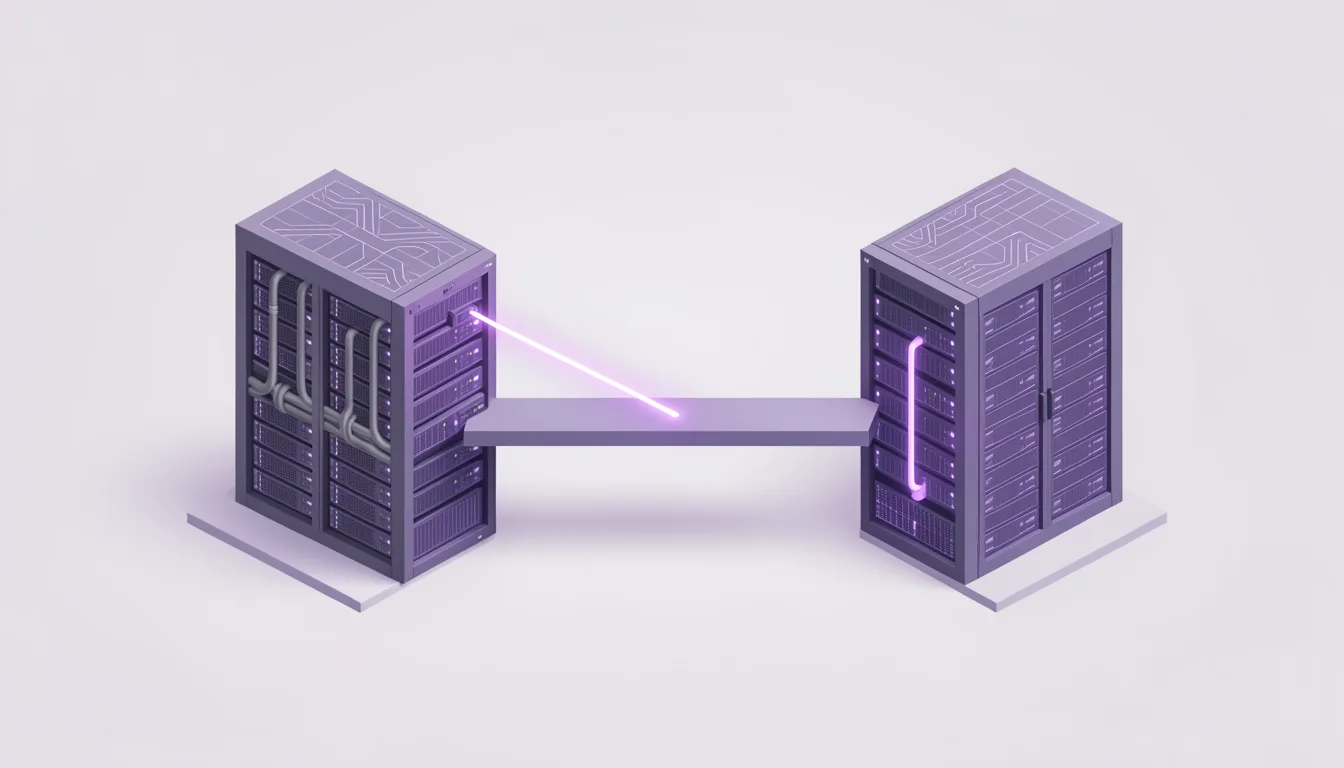
Your latency-sensitive inference workload is already paying for decode latency. Groq 3 LPX, an interactive AI inference accelerator extending the Vera Rubin platform, is now in full production. The trade-off is faster decode against a rack that can be quoted at up to $1 million.
Run the arithmetic before you judge the chip. Compare baseline $/token plus latency penalty against split prefill/decode $/token plus rack amortization. Adopt the slice only when the SLO savings exceed the premium; otherwise keep the workload on the existing path. The output is a monthly net number that can be defended in a budget review.
The spread is the entry fee
Decode-only hardware changes token generation speed, not model quality. It helps when the prompt is already processed and the user is waiting for the next token. Agentic latency compounds because each tool call waits for the next token stream.
Prefill decode disaggregation separates the two stages that usually share a GPU pool. Prefill is compute-bound and parallel across the prompt. Decode is memory-bound and often serialized by the next token. A decode-only slice can improve the second stage without paying for the first stage at the same speed.
Start with the request mix. Batch jobs, offline evaluation, and long-context RAG can stay on a cheaper path. Interactive chat, coding agents, and tool loops are the slice that may justify a faster decode path. The slice should serve the traffic where waiting is the product.
Say your baseline costs $0.50 per 1,000 output tokens and each missed SLO costs $100 per hour. Reduced tail latency can offset the added cost when service-level breaches are expensive. Recurring token and rack costs can shrink the net benefit when the split path adds overhead.
Replace that hypothetical with your traffic mix, SLO, and rack quote before the next review.
Speed only pays when the SLO is the product
Use the public benchmark as an upper bound, not a guarantee. In Artificial Analysis benchmarking, Groq 3 LPX achieved 3,400 output tokens per second on Gemma 4 31B with a 100,000-token context, a result NVIDIA described as the fastest recorded for that model. NVIDIA linked the benchmark to four times faster responsiveness than the nearest alternative.
Put a dollar value on the penalty. A missed SLO can mean a dropped session, a support ticket, a failed agent step, or a customer who switches providers. A zero penalty makes the speed premium hard to justify.
Check the queue, not just the chip. Retrieval, database calls, or human approval can move the bottleneck away from token generation. The SLO must improve at the user-facing endpoint.
Do not amortize the rack over all traffic. Amortize it over the slice that actually needs decode speed. A small interactive share can make the effective premium per served request much larger.
The migration path is the hidden variable
Nebius plans to be the first AI cloud to deploy Groq 3 LPX through Nebius Token Factory, its production inference platform. Nebius said Groq 3 LPX would be accessible through the same API developers already use, without requiring migration to a new stack. That lowers the trial cost, but it does not remove the budget test.
Keep a rollback path. A decode-only slice should be a routing decision, not a rewrite. A failed test slice returns traffic to the baseline path without a release.
- Baseline current decode cost and latency penalty; produce a monthly table with $/token, p99, SLO misses, and revenue or support cost per miss.
- Price the split prefill/decode path; quote prefill capacity, decode capacity, data transfer, and any per-token premium.
- Amortize the rack; express it as a monthly cost per interactive request, not a one-time list price.
- Compare SLO savings to premium; produce a net monthly number: SLO savings minus added token cost minus amortized rack cost.
- Pilot through the existing API; run a test slice with the same model, same prompt distribution, and a rollback path.